21 Results for "

Lindera akoensis Hay.

" in MedChemExpress (MCE) Product Catalog:
Products (21)

21 Results for "Lindera akoensis Hay." in MCE Product Catalog:

2
2 Cited Publications
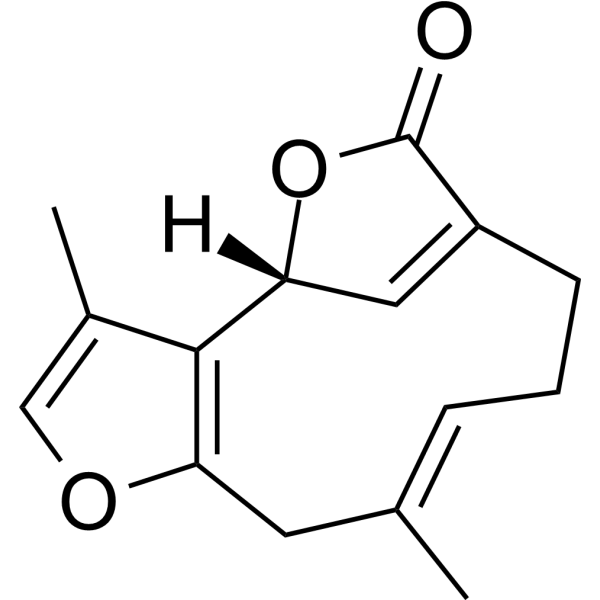
Cat. No.: HY-N0781
CAS No.: 728-61-0
Linderalactone is an important sesquiterpene lactone isolated from Lindera aggregata. Linderalactone inhibits cancer growth by modulating the expression of apoptosis-related proteins and inhibition of JAK/STAT signalling pathway. Linderalactone also inhibits the proliferation of the lung cancer A-549 cells with an IC50 of 15 µM .
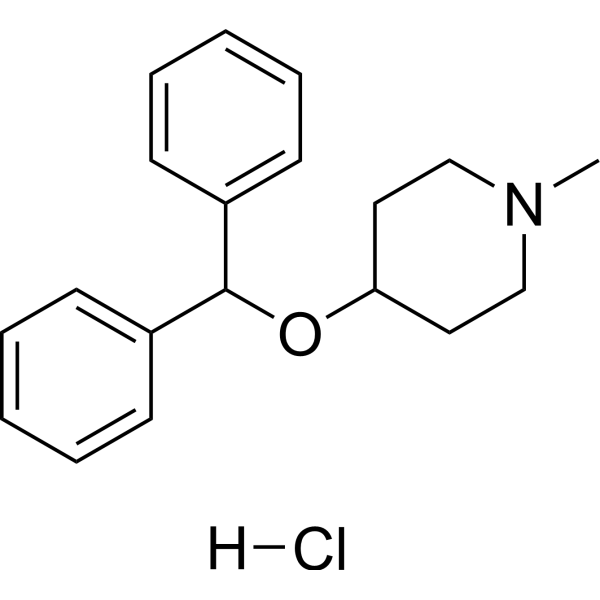
Cat. No.: HY-B0970
CAS No.: 132-18-3
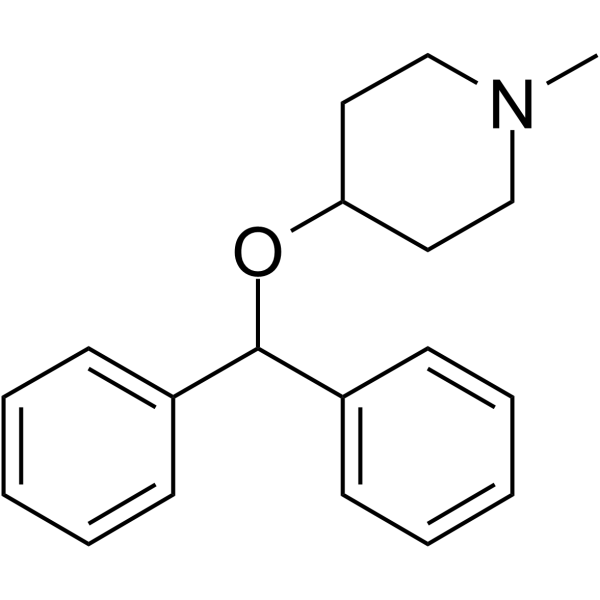
Synonyms: 4-Diphenylmethoxy-1-methylpiperidine hydrochloride
Target:  

Histamine Receptor

Research Areas:  

Neurological Disease Endocrinology

Diphenylpyraline hydrochloride is a potent histamine H1?receptor antagonist. Diphenylpyraline hydrochloride acts as an orally active antihistamine agent?with antimuscarinic and antiallergic effects. Diphenylpyraline hydrochloride can be used for the relief of allergic conditions including rhinitis and hay fever, and in pruritic skin disorders in vivo.
Cat. No.: HY-N0688
CAS No.: 13476-25-0
Linderane, isolated from the root of Lindera aggregata, is an irreversible inhibitor cytochrome P450 2C9 (CYP2C9). Linderane has the potential to relieve pain and cramp .
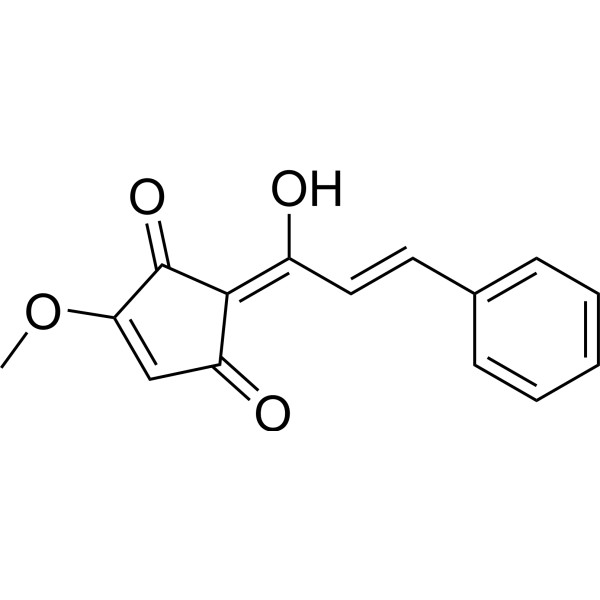
Cat. No.: HY-N3364
CAS No.: 19956-53-7
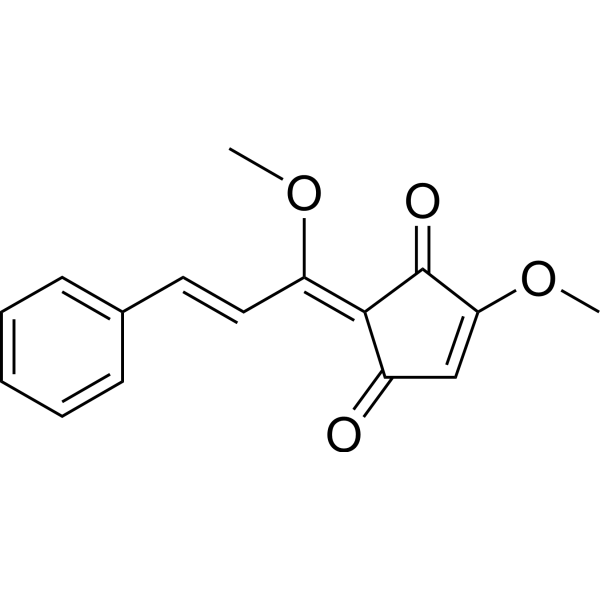
Lucidone, an anti-inflammatory agent that can be isolated from the fruit of Lindera erythrocarpa Makino. Lucidone inhibits LPS-induced NO and PGE2 production in RAW 264.7 mouse macrophages. Lucidone also decreases TNF-α secretion, iNOS and COX-2 expression. Lucidone prevents NF-κB translocation and inhibits JNK and p38MAPK signals. Lucidone also has inhibitory activity against Dengue virus (DENV) (EC50=25 μM) .
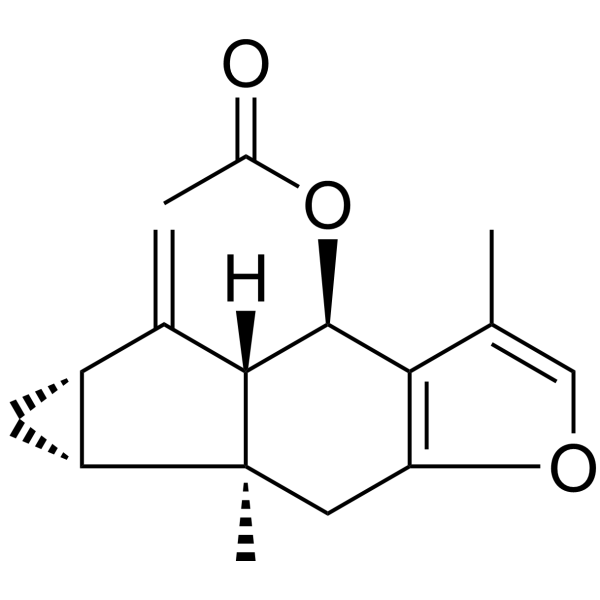
Cat. No.: HY-N6902
CAS No.: 26146-28-1
Linderene acetate, isolated from the root of Lindera strychnifolia, is a prolyl endopeptidase inhibitor .
Cat. No.: HY-N3260
CAS No.: 19956-54-8
Methyllucidone is a neuroprotective agent and an antioxidant that can be isolated from Lindera erythrocarpa Makino. Methyllucidone inhibits the ROS production, and activates antioxidant signaling pathways that include Nrf-2 and PI3K .
Cat. No.: HY-N3106
CAS No.: 42438-78-8
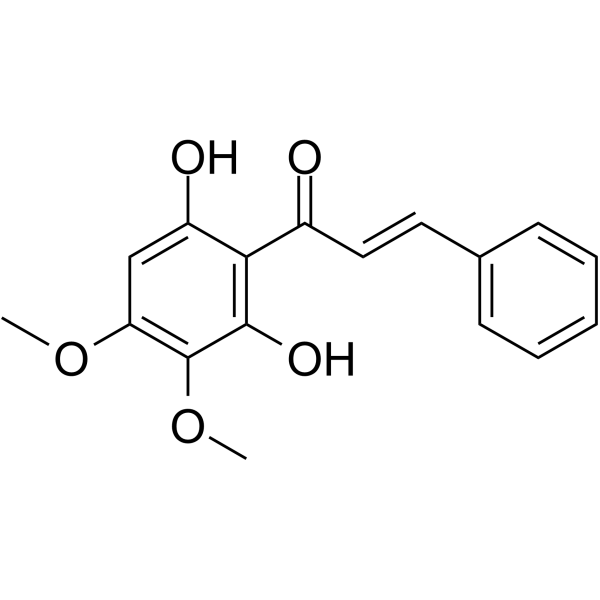
Pashanone is a compound isolated from Lindera erytbrocarpa Makino (Lauraceae) .
Cat. No.: HY-N2936
CAS No.: 1227375-09-8
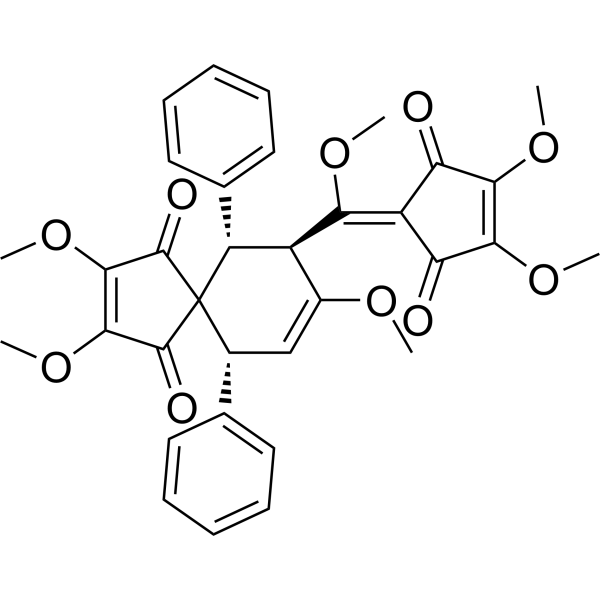
Bi-linderone is isolated as racemate from the traditional Chinese medicinal plant Lindera aggregata. Bi-linderone has activity against glucosamine-induced insulin resistance in HepG2 cells at a concentration of 1 μg/mL .
Cat. No.: HY-N12521
CAS No.: 145163-97-9
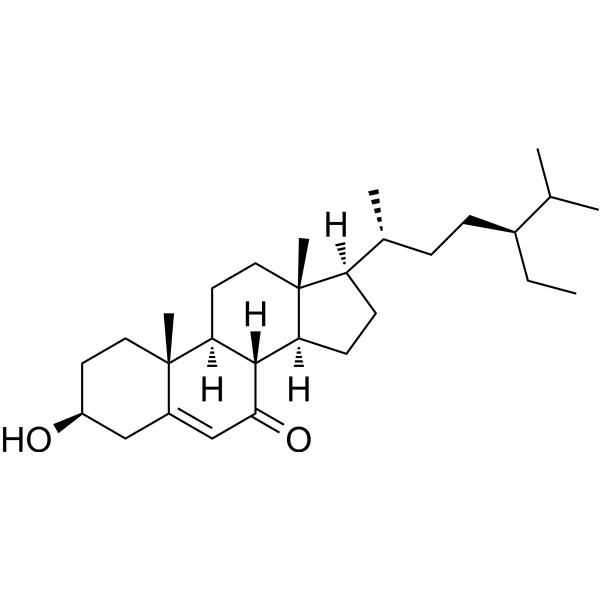
(3β,24S)-3-Hydroxystigmast-5-en-7-one (Compound 31) is a compound that can be isolated from Lindera akoensis . (3β,24S)-3-Hydroxystigmast-5-en-7-one has anti-inflammatory activity .
Cat. No.: HY-N12790
CAS No.: 1314021-69-6
Synonyms: Ananonin B
Arisanschinin D (Ananonin B) is an α-Glucosidase inhibitor and can be isolated from Schisandra arisanensis Hay .
Cat. No.: HY-N3875
CAS No.: 1195233-59-0
Ethyllucidone is a Chalcones product that can be isolated from the roots of Lindera strychnifolia .
Cat. No.: HY-N3183
CAS No.: 14028-97-8
N-Methyllindcarpine is a Alkaloids product that can be isolated from the barks of Lindera pipericarpa .
Cat. No.: HY-107431
CAS No.: 147-20-6
Purity:  98.60%
Target:  

Histamine Receptor

Research Areas:  

Inflammation/Immunology

Diphenylpyraline is a potent histamine H1 receptor antagonist. Diphenylpyraline acts as an orally active antihistamine agent with antimuscarinic and antiallergic effects. Diphenylpyraline can be used for the research of allergic diseases, including rhinitis and hay fever, and pruritic skin disorders et.al .
Cat. No.: HY-N3380
CAS No.: 1235126-46-1
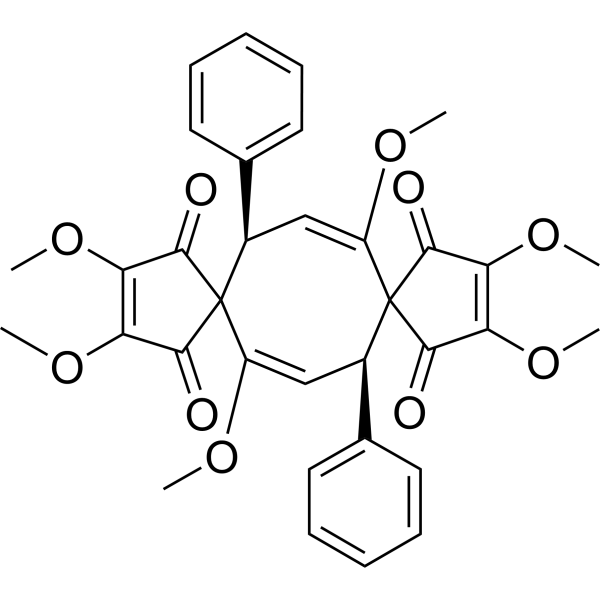
Linderaspirone A is a natural compound that can be isolated from the roots of Lindera aggregate. Linderaspirone A shows significant inhibitory effects on the production of prostaglandin E2 (PGE2),TNF-α, and IL-6 .
Cat. No.: HY-N0688R
CAS No.: 13476-25-0
Linderane (Standard) is the analytical standard of Linderane. This product is intended for research and analytical applications. Linderane, isolated from the root of Lindera aggregata, is an irreversible inhibitor cytochrome P450 2C9 (CYP2C9). Linderane has the potential to relieve pain and cramp .
Cat. No.: HY-107431R
CAS No.: 147-20-6
Diphenylpyraline (Standard) is the analytical standard of Diphenylpyraline. This product is intended for research and analytical applications. Diphenylpyraline is a potent histamine H1?receptor antagonist. Diphenylpyraline acts as an orally active antihistamine agent?with antimuscarinic and antiallergic effects. Diphenylpyraline can be used for the research of allergic diseases, including rhinitis and hay fever, and pruritic skin disorders et.al .
Cat. No.: HY-N0781R
CAS No.: 728-61-0
Linderalactone (Standard) is the analytical standard of Linderalactone. This product is intended for research and analytical applications. Linderalactone is an important sesquiterpene lactone isolated from Lindera aggregata. Linderalactone inhibits cancer growth by modulating the expression of apoptosis-related proteins and inhibition of JAK/STAT signalling pathway. Linderalactone also inhibits the proliferation of the lung cancer A-549 cells with an IC50 of 15 μM .
Cat. No.: HY-N15690
CAS No.: 220235-66-5
3-(R)-3-β-Glucopyranosyloxy-4-hydroxybutanoic acid is a butanoic acid glucose. 3-(R)-3-β-Glucopyranosyloxy-4-hydroxybutanoic acid can be isolated from the methanol extract of dried whole plants of Anoectochilus formosanus Hay. 3-(R)-3-β-Glucopyranosyloxy-4-hydroxybutanoic acid can be formed in 3 types of regenerated plantlets in vitro .
Cat. No.: HY-N8919
CAS No.: 200125-11-7
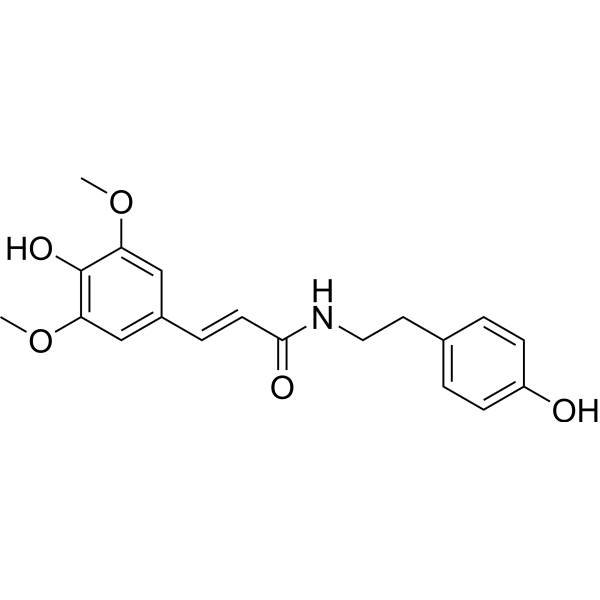
N-trans-Sinapoyltyramine is an alkaloid. N-trans-Sinapoyltyramine can be isolated from Lindera glauca Sieb Zucc .
Cat. No.: HY-N2645
CAS No.: 118930-92-0
Synonyms: 5-(3-Hydroxypropyl)-7-methoxybenzofuran
7-Methoxy-5-benzofuranpropanol (5-(3-Hydroxypropyl)-7-methoxybenzofuran) is a Chalcones product that can be isolated from the roots of Lindera strychnifolia .

